White Spot Disease
White Spot Disease in fish
White spot disease, commonly known as Ich, is one of the most widespread parasitic diseases affecting freshwater fish in aquaculture systems and aquaria. The disease is caused by the ciliate parasite Ichthyophthirius multifiliis, which infects the skin, fins, and gills of fish and can spread rapidly through aquatic systems.
Clinical signs
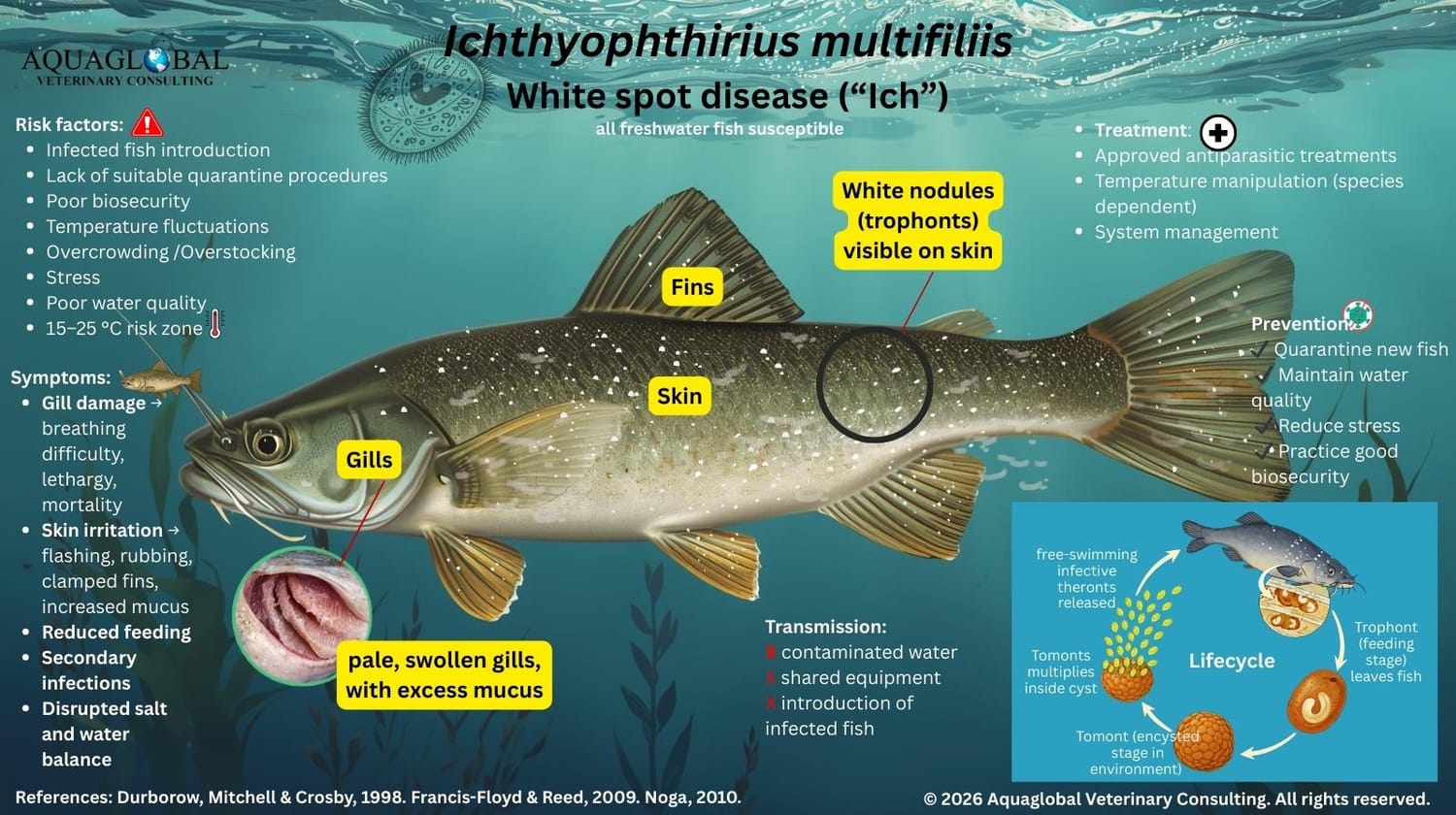
Infected fish typically develop small white nodules that resemble grains of salt on the body and fins. These lesions represent the feeding stage of the parasite within the fish’s epithelial tissues. As the infection progresses, fish may show signs of irritation, flashing or rubbing against surfaces, respiratory distress, and reduced feeding. In severe outbreaks, particularly in crowded aquaculture systems, the disease can cause significant stress, gill damage, and mortality.
Transmission and lifecycle
Because the parasite has a complex lifecycle involving both the fish and the surrounding environment, outbreaks can develop quickly if early signs are not recognised.
Prevention and management
Effective management relies on
• early detection,
• quarantine of new fish
• good biosecurity practices,
• appropriate treatment interventions when outbreaks occur
Learn more
The infographic below provides an overview of the parasite’s lifecycle, common symptoms, risk factors, transmission pathways, and practical approaches to prevention and control.
If you are experiencing disease challenges in your aquaculture system or aquarium or would like guidance on biosecurity, disease prevention, or treatment interventions, please contact Aquaglobal Veterinary Consulting for professional aquatic veterinary support.